
By sea
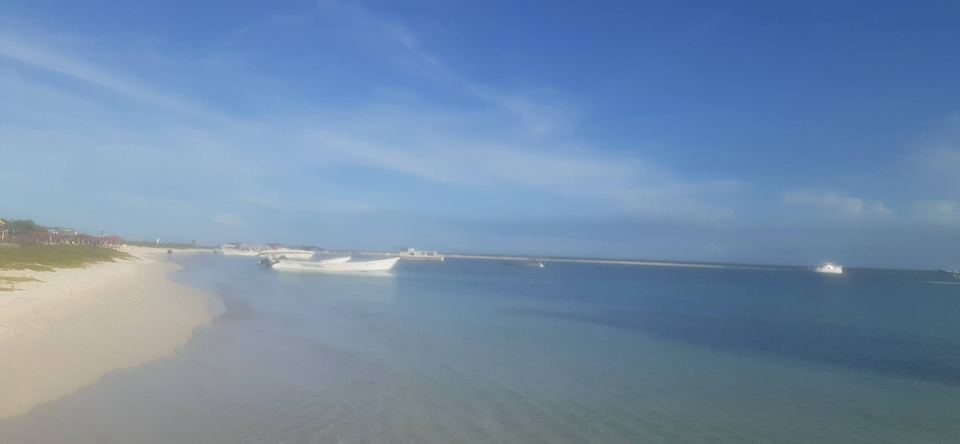
The usual way in is by sport boat or yacht; the open wooden peñeros are mostly used by fishers.[1]
From Higuerote (Miranda)
This is the traditional departure point. The crossing takes 2–3 hours depending on waves and wind.[1] One camp operator quotes about 3 hours by sport boat, 4 by standard boat and 6 by passenger yacht.[2] Most packages run Friday to Sunday (3 days, 2 nights).[2][3]
Take care on departure
The Higuerote area has strong currents and considerable swell, and the crossing passes over the Cariaco Trench.[1] Travel with operators who carry safety equipment and who reschedule if the sea is rough.
From Lechería and Puerto La Cruz (Anzoátegui)
Transfers also run from Puerto La Cruz.[1] Yacht-charter companies in the Lechería and Puerto La Cruz area offer trips to La Tortuga.[4]
From Margarita
Occasionally people sail from Margarita Island, leaving from Boca de Pozo on the Macanao peninsula.[1]
By air
There is no airport, only a rudimentary airstrip. For years private light aircraft flew in from Higuerote, Charallave or La Carlota (Caracas), but according to Wikipedia these flights are restricted by Venezuela's civil aviation authority (INAC).[1] If you plan to fly, confirm the current situation with INAC and your operator.
Practical tips
- There are no paved roads; getting around is by boat.[1]
- Outside the camps and the Playa Caldera complex there are no services. Bring water, sunscreen, a hat and insect repellent.[2]
- Nights are often breezy and cool: pack a warm layer.[2]
- Camps usually have a generator and a charging point; check what each package includes.[3]
- Check the sea forecast before you go.
Travel advisories
Some governments publish travel advisories for Venezuela. Check your own government's advice before planning; for example the US State Department or the UK FCDO.