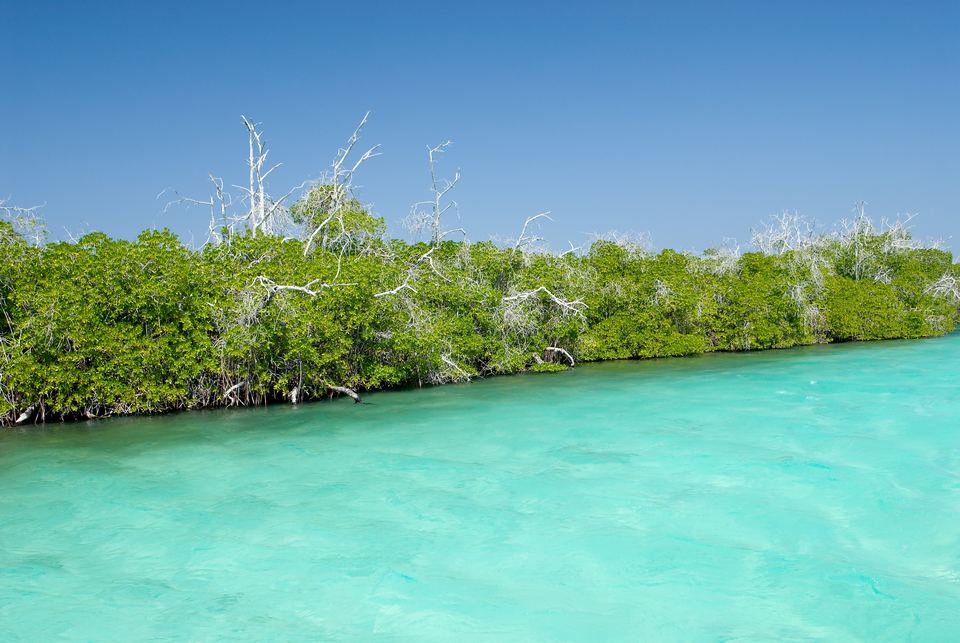
La Tortuga has been relatively little studied, but what is known marks it out as an important place for conservation.[1]
Mangroves and lagoons
Mangrove forest lines the south and east coasts and several lagoons, which depend on rainwater stored in the island's karst terrain.[1] The lagoons surveyed hold saline groundwater and, except Los Mogotes, have no direct connection to the sea; they are fringed with black mangrove (Avicennia germinans) and red mangrove (Rhizophora mangle).[2] At Punta de Ranchos, seasonal ponds are ringed by salt-tolerant plants such as Batis maritima, Sesuvium portulacastrum and Salicornia.[2]
The sandy ground supports extensive, well-preserved salt-tolerant grasslands and limestone-sand dunes colonised by shrubs and herbs.[1]
Shorebirds
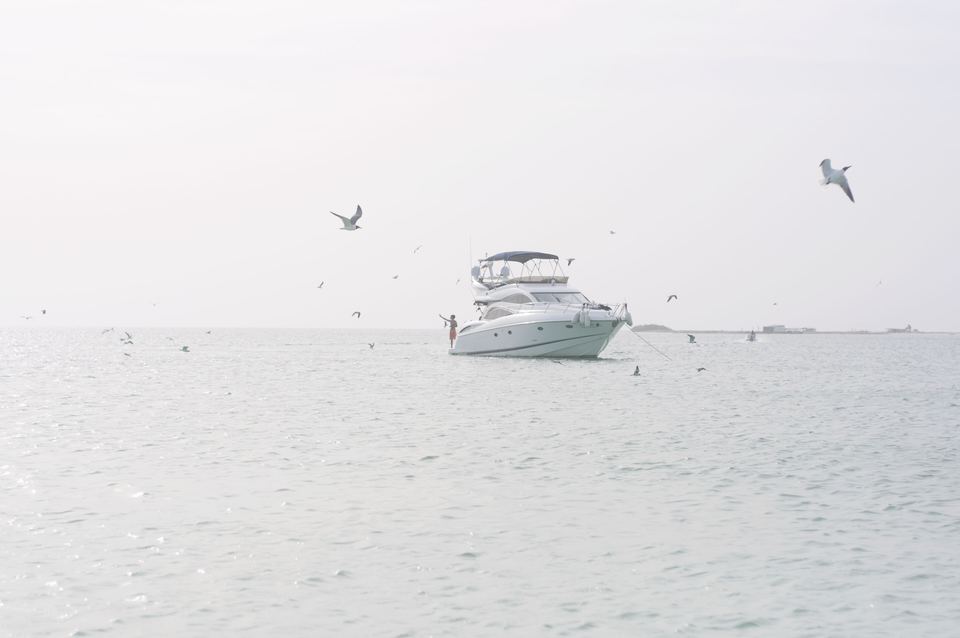
The island sits on the flyway of shorebirds migrating between North and South America. Between August and December, a census of five wetlands on the island and two cays (Herradura and Tortuguillo Este) counted 987 birds of 20 species.[2] Numbers were high in August, September and October and fell in November and December; the most important species were Lesser Yellowlegs (Tringa flavipes) and Western Sandpiper (Calidris mauri).[2] The study recorded Dunlin (Calidris alpina) and Killdeer (Charadrius vociferus) for the first time on Venezuela's islands.[2]
Altogether at least 76 bird species have been recorded on the island, including North American migrants and several gulls and terns that breed there.[1]
Sea turtles
Venezuela has five sea-turtle species: green, loggerhead, hawksbill, leatherback and olive ridley.[3] According to Fundación Tierra Viva, all five use La Tortuga to feed or nest, and four nest on its beaches.[1] Sources differ on the details: Venezuela Tuya lists leatherback, hawksbill, green and loggerhead as nesting species[4], and the WIDECAST viewer marks La Tortuga as a nesting site for green, loggerhead, hawksbill and leatherback, without counts.[5] All are threatened.[1]
If you see a turtle or a nest
Keep your distance, don't shine lights on the beach at night, and never touch eggs or hatchlings. The hawksbill has been fully protected under Venezuelan law since 1979.[3]
Reefs
The island has important coral reefs, lush mangroves and extensive seagrass meadows that support rich biodiversity.[4] From Cayo Herradura, dive groups make short trips to the coral barriers and the drop-offs south of the main island.[6]